|
| |
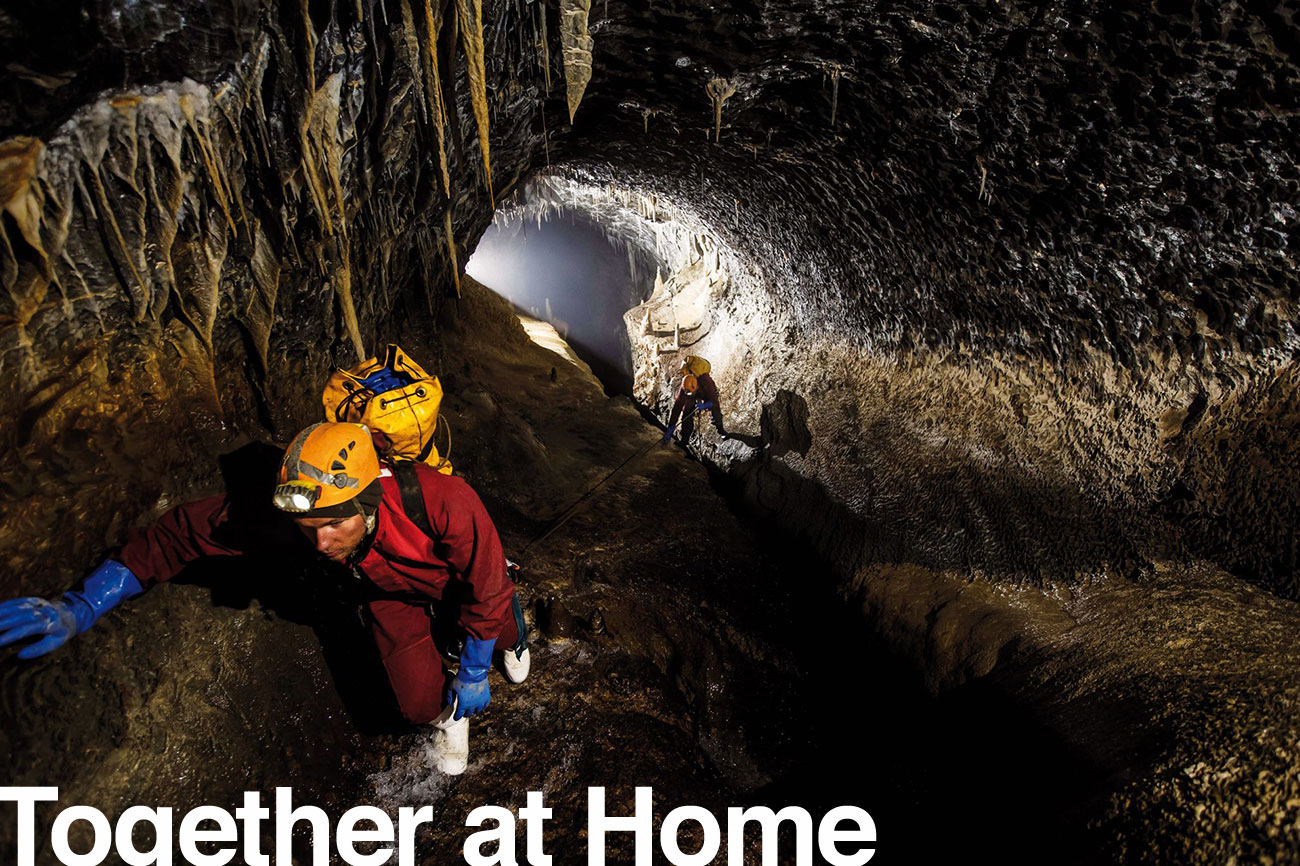
What Lies Beneath
A small group of New Zealand’s elite cavers are pushing further than ever before into the marble heart of the Arthur Range, west of Nelson. To date, they’ve discovered 14 kilometres of previously unknown passages, and now, battling extreme cold, exhaustion and unrelenting rock, they are a hair’s breadth from connecting two of the country’s biggest and deepest cave systems.
Read more...
|
|
|
|
| |

|
Talking points
Discuss the ideas presented in the story with your family—at home or over video conferencing. Find ways to involve as many people as possible, especially those who you know are isolated by the lock-down. - The Arthur Range is in the Kahurangi National Park. Have a look at this on the map if you don’t already know where it is. How would you get there from your house – what planes / car-trips / ferry rides might you take? How long would it take you to get there?
- Do you think of mountains as being solid, or full of holes and passages like they are described in the first paragraphs? What is the writer saying creates all the holes and passages?
- The writer describes the inside of the mountain range as a “labyrinth.” Why is this a good comparison?
- “A fit person should be able to squeeze through a gap little bigger than the width of this page.” Have a look at an A4 page. Does this seem like a small space? Would you cope ok with having to go into a passage this size? Read the outline of the method for doing so (it follows the sentence quoted above in the article) and see if you can act it out.
- What would you find the most daunting aspect of exploratory caving? Small spaces? Not knowing whether you would find what you were looking for? Being wet and cold? Sleeping underground? No cell phone reception? The danger of falling or drowning? Do the rewards of exploring places no one has ever been, or the beauty of the underground world, appeal to you?
|
|
|
|
|
|
| |
![145_Viewpoint_shutterstock_227311084-[Converted]](https://cdn.nzgeo.tv/2017/04/145_Viewpoint_shutterstock_227311084-Converted-336x336.jpg)
|
Activity: Folded Paper Streamer
Have you ever made a paper streamer decoration? These are fun to fold and magical when you unfold them! Crepe paper in two contrasting colours makes great streamers for a party decoration but you can use any paper to make a small streamer.
You will need:
- Scissors
- Tape or glue
- Crepe paper in two contrasting colours. If you are using crepe paper, cut a strip about 4cm wide in each colour and leave it in a roll or wad. (If you don’t have crepe paper, use normal paper.
- Giftwrap or an old painting could work well but you would need to join up the strips with glue to make a long, narrow, continuous piece of paper.) Try to use a softer, floppier weight of paper.
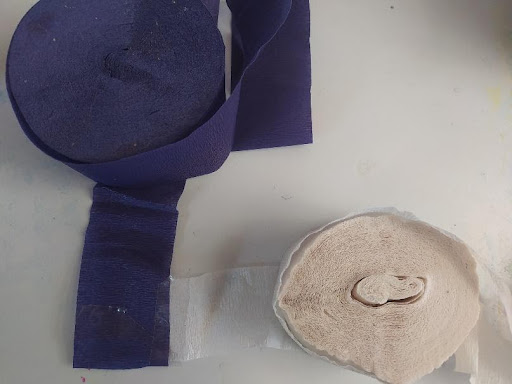
Step One: Glue or tape together the ends of your two strips of paper, making them into an ‘L’ shape.
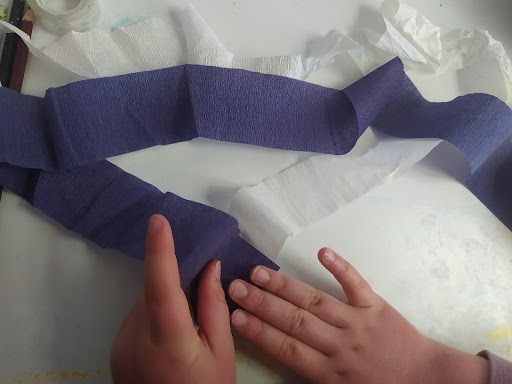
Step Two: Fold back over the centre, alternating colours. Press firmly down to make a crease each time you fold. Do this until you think the paper streamer might be long enough.
Step Three: This Is the fun part – unfold your work. If you’re happy with the length, secure the end with glue or tape. Now you have a decoration you can use around the house!
|
|
|
|
|
|
| |
Fresh water
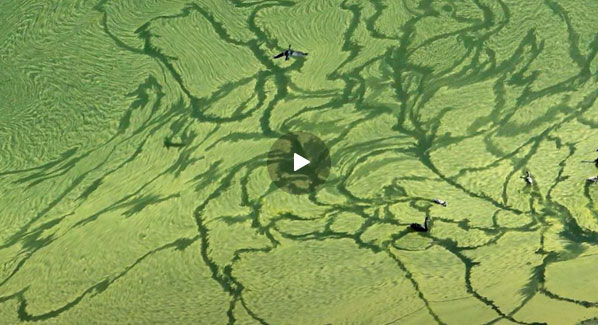
Beautiful, haunting images of the life in our healthy rivers is contrasted with images of intensive agriculture and slimy, sediment-filled rivers in this powerful video about the critical state of fresh water. Dr Mike Joy is interviewed and explains how various factors degenerate the water.
Watch the video, then ask yourself; how do you experience the soundtrack in this video as pertinent to its message?
|
|
|
|
| |
What is Together at Home?
New Zealand Geographic started Together at Home at the beginning of the first lockdown in 2020. It was hit with parents, and also for grandparents who felt isolated and wanted to join in. It also gave parents themselves some welcome escape. If you're not into it, just hit unsubscribe. If you like it, then send us pictures of what you make and encourage others to join the list on the Together at Home hub. It will be coming your way every day of the lockdown.
As the rest of the country is no longer in lockdown we filtered the list to include only email addresses in Auckland, or for which we could not verify the location. If you're not in Auckland or do not want it, no worries, just hit unsubscribe. |
|
|
|
| |
How do NZGeo digital subs work?
You can access three items per month totally free on NZGeo.com, and thereafter it costs $1 per week for a digital subscription. (We bill $8.50 every two months to a credit card, or $50/year if you prefer.) A digital subscription gives you access to more than 10,000 stories and 400 hours of natural history documentaries on-demand, on any device.
|
|
|
|
|
|