|
| |
Goodbye from us...
With schools reopening in the locked-down parts of New Zealand, our lives take on a semblance of normality, parents and caregivers breathe a sign of relief, and the daily shot of Together at Home to keep us all stimulated and interacting may not be needed for a while, we hope.
If you've enjoyed this, make sure you're signed up to the Weekender which arrives every Friday evening. From our family to yours, kia kaha and mauri ora.
Steph, Rosie, Jervis, Jeremy, James and the wider NZGeo team.
|
|
|
|
| |
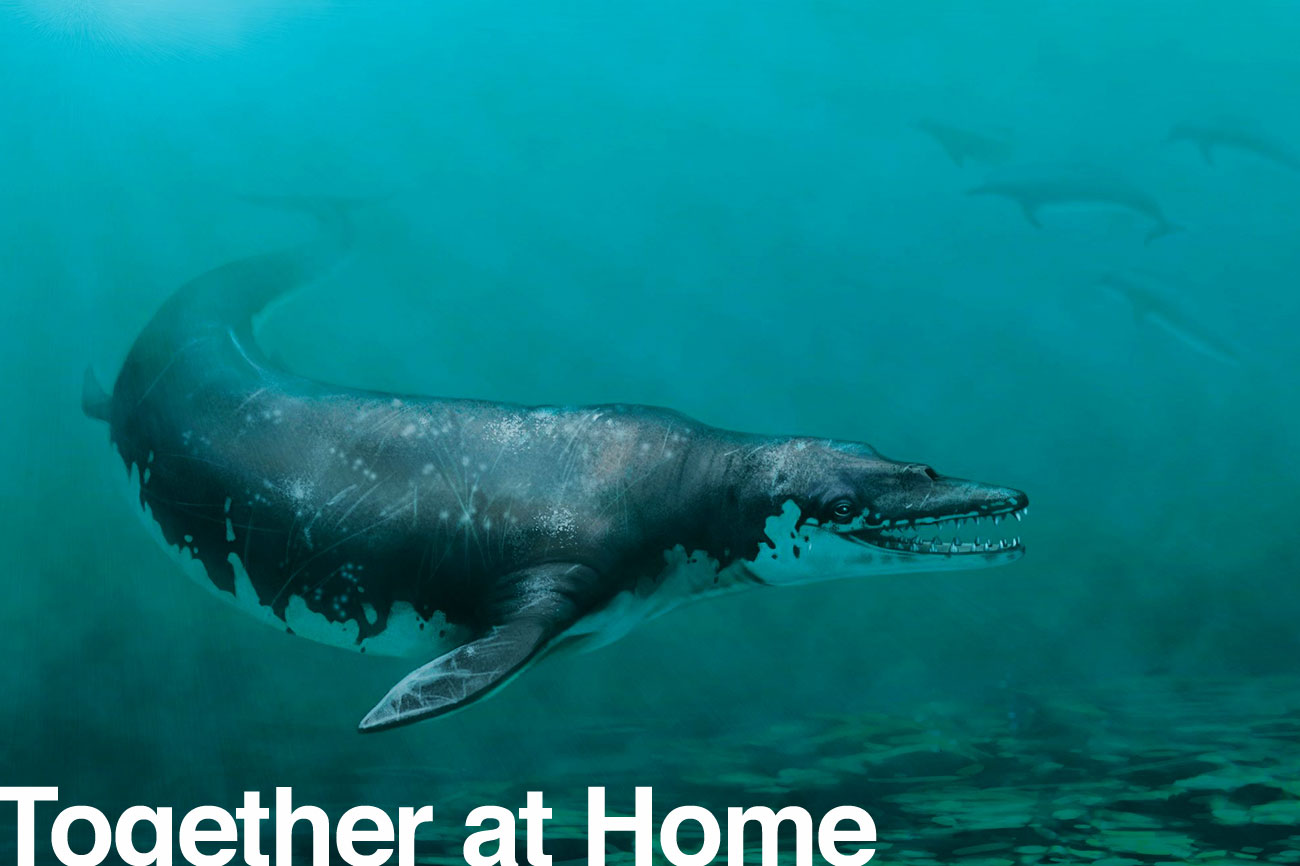
Valley of the whales
The North Otago limestone country holds one of the world’s most important fossil cetacean records, a coherent story of how whales and dolphins evolved in the Southern Ocean. It’s a story that one small rural community has embraced as its own.
Read more...
|
|
|
|
| |

|
Talking points
Discuss the ideas presented in the story with your family—at home or over video conferencing. Find ways to involve as many people as possible, especially those who you know are isolated by the lock-down. - Looking through the illustrations of prehistoric sea creatures, how does each one look familiar, and how does it look different? What do you think of the squalodontid – the shark-toothed dolphin, pictured here seizing a giant penguin in its teeth?
- Ewan Fordyce is New Zealand’s only cetacean palaeobiologist. What can you figure out about what he does for a living, based on your knowledge of these words? Guess what you can first, then look up anything you’re not sure of. (For an extra challenge – how quickly can you say ‘cetacean palaeobiologist?’)
- North Otago’s limestone country has been marketed as the “Vanished World Trail” and allows visitors to access prehistoric fossil sites on private farmland – so you can go and see things like the skeleton of a giant penguin where it was deposited on the ocean floor millions of years ago. It was also a location for The Chronicles of Narnia. Is this a place you’d be excited to go and visit? What can you find out about where the trail is, how you’d get there and what you’d try to see?
- “This valley is a time capsule, filled with the memories of creatures from another era.” Can you explain how the limestone hills of North Otago came to be filled with layers of the bones of sea creatures?
- Scientists examine the fossils for clues as to the creature’s identity – such as tiny protrusions on the ear bone. Why might it be considered important to keep trying to figure out what creatures lived in the past, and how they are linked to living creatures today?
|
|
|
|
|
|
| |
![145_Viewpoint_shutterstock_227311084-[Converted]](https://images.nzgeo.com/2017/04/145_Viewpoint_shutterstock_227311084-Converted-1300x1300.jpg)
|
Activity: Make a Solar Cookie Oven
You don’t need electricity to make a batch of biscuits – a box and a few bits and pieces from the pantry are all you need, provided it’s a sunny day! You will need: - A pizza box or some other kind of relatively flat box
- Black paper
- Tinfoil
- Kebab sticks
- Some tape
- Scissors
- Plastic kitchen wrap
Step One: Cut a large flap in the lid of the pizza box, leaving the hinged edge along the back of the lid. Cover the inside of the flap and the inside of the base of the box with tinfoil. Step Two:
Put a piece of black paper on the bottom of the box and put your uncooked cookies on it. Step Three: Prop the flap up at an angle that allows the sun to reflect the tinfoil on the top down onto the cookies. Use the kebab sticks to prop it up. Cover the cookies with plastic kitchen wrap (tape this into place so it doesn’t blow away.) After about two hours your cookies will be ready to eat – they might not be as crisp as if they’d been cooked in a conventional oven but they should be delicious! Send us a picture of your solar cookie oven!
|
|
|
|
|
|
| |
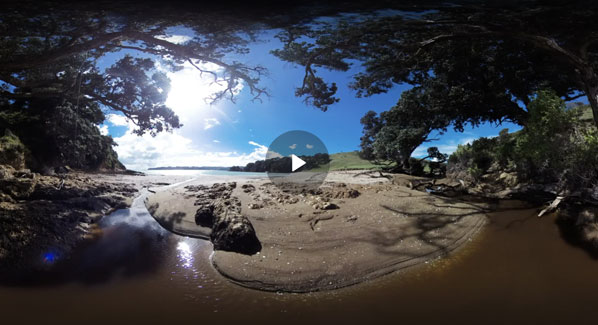
Virtual Reality: Waiheke Channel
At first sight, this VR video of a beach on the northern reaches of Pōnui Island seems idyllic. Look more closely and you’ll see that the stream that runs from the farmland into the channel is far from healthy.
Watch the video, then ask yourself; how does this stream look to be affected by run-off from livestock?
|
|
|
|
| |
What is Together at Home?
New Zealand Geographic started Together at Home at the beginning of the first lockdown in 2020. It was hit with parents, and also for grandparents who felt isolated and wanted to join in. It also gave parents themselves some welcome escape. If you're not into it, just hit unsubscribe. If you like it, then send us pictures of what you make and encourage others to join the list on the Together at Home hub. It will be coming your way every day of the lockdown.
As the rest of the country is no longer in lockdown we filtered the list to include only email addresses in Auckland, or for which we could not verify the location. If you're not in Auckland or do not want it, no worries, just hit unsubscribe. |
|
|
|
| |
How do NZGeo digital subs work?
You can access three items per month totally free on NZGeo.com, and thereafter it costs $1 per week for a digital subscription. (We bill $8.50 every two months to a credit card, or $50/year if you prefer.) A digital subscription gives you access to more than 10,000 stories and 400 hours of natural history documentaries on-demand, on any device.
|
|
|
|
|
|