|
| |
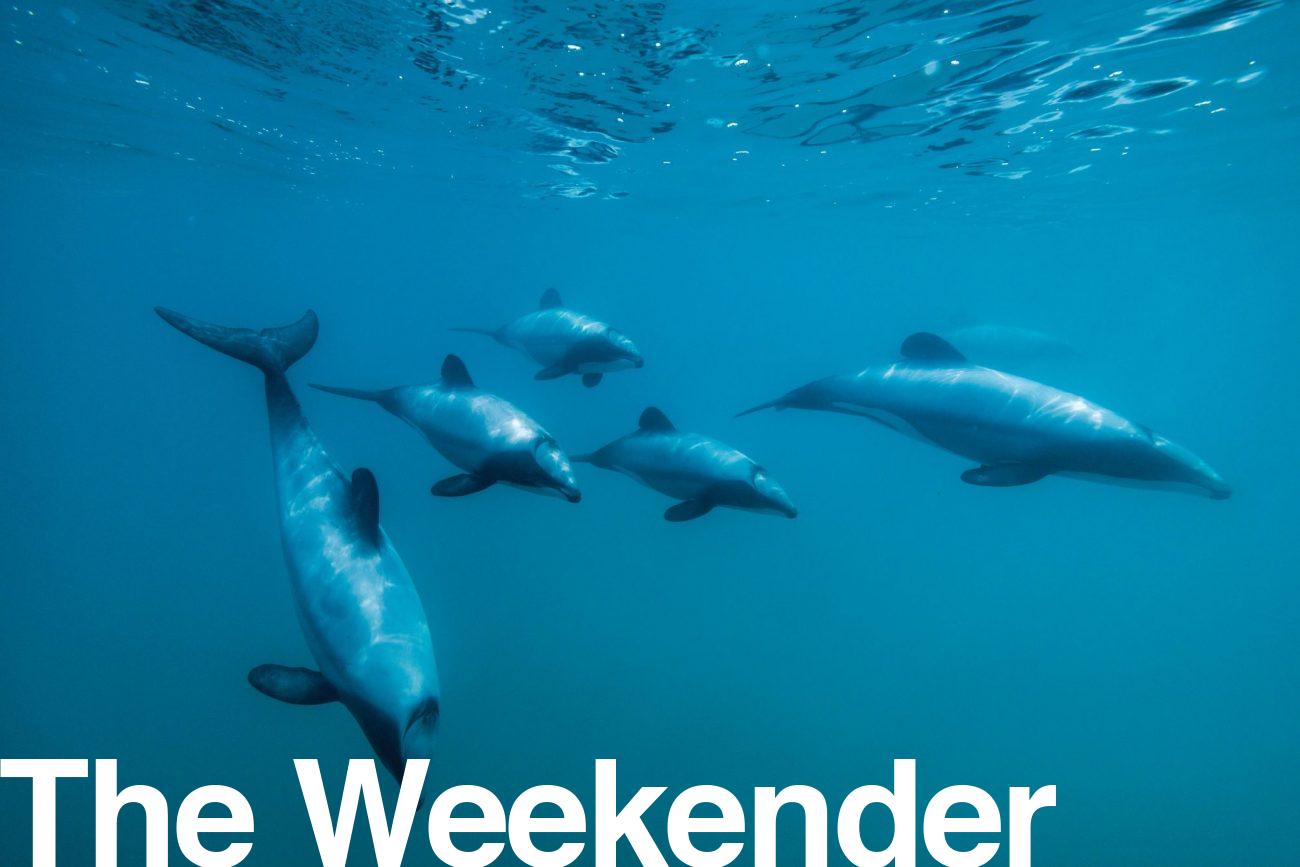
The case of the very small dolphin
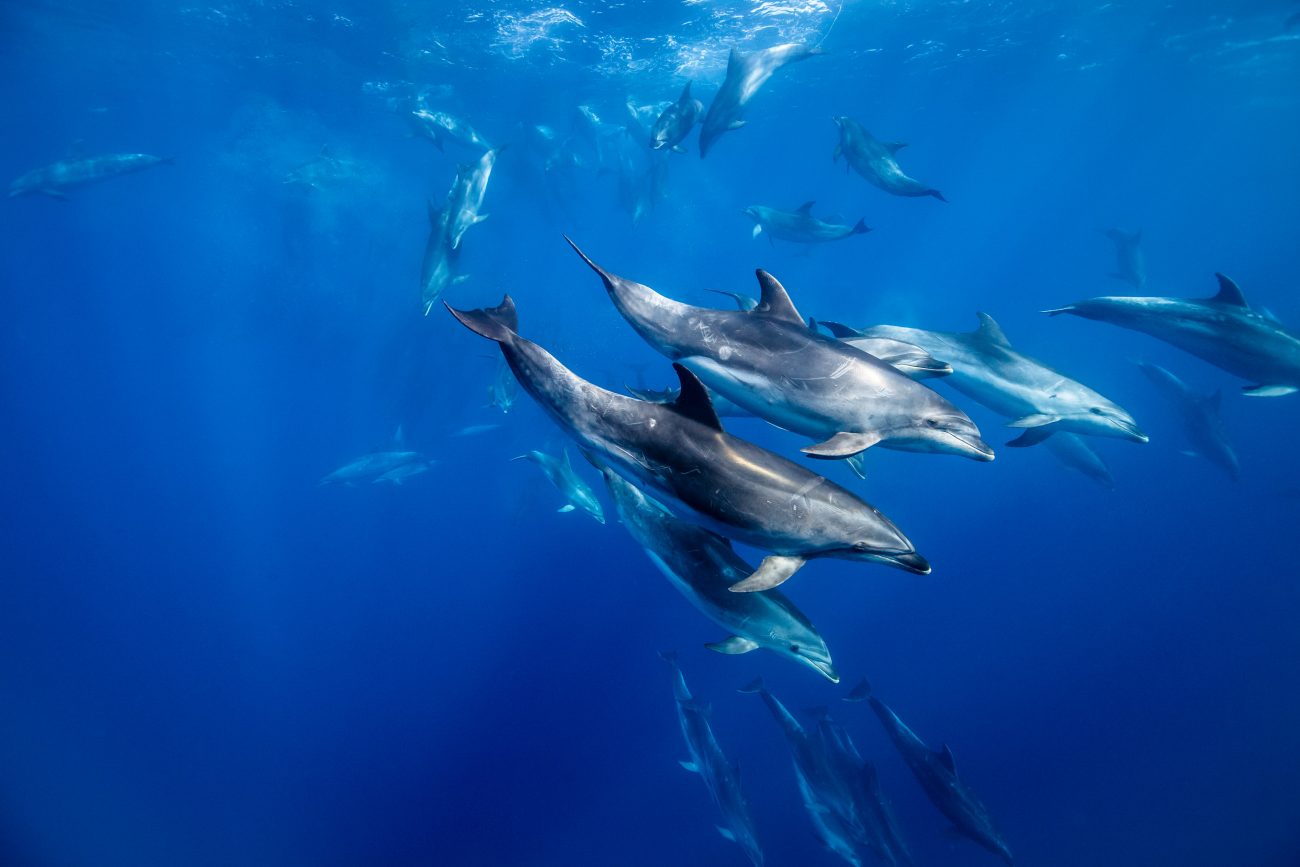
The waka paddles slice placid water, a dozen of us pulling in unison, ferrying a body across the Waikouaiti awa to her final resting place. We beach the vessel on Ōhinepouwera, the sandspit opposite Karitāne, where hundreds of whales were butchered back when Johnny Jones ran his empire of blubber and bone. Now, it’s a place of peace, the waves patiently cleaning the sand of its grisly past. It’s earthquake weather, the nor’west sculpting spaceships in the sky. The kaikaraka’s wailing cry leads us up the dunes, the deceased dolphin in the place of honour, at the front. She’s gently lowered into a hole, wrapped in a korowai of rimurimu, a kelp cloak. Children add seashells to the offering. To the strains of ‘Te Aroha’, spadefuls of sand cover the dolphin and she begins her long rest. This Hector’s dolphin died a bit more than four nautical miles from here, just beyond the invisible line in the sea that might have saved her. Keep reading...
|
|
|
| |
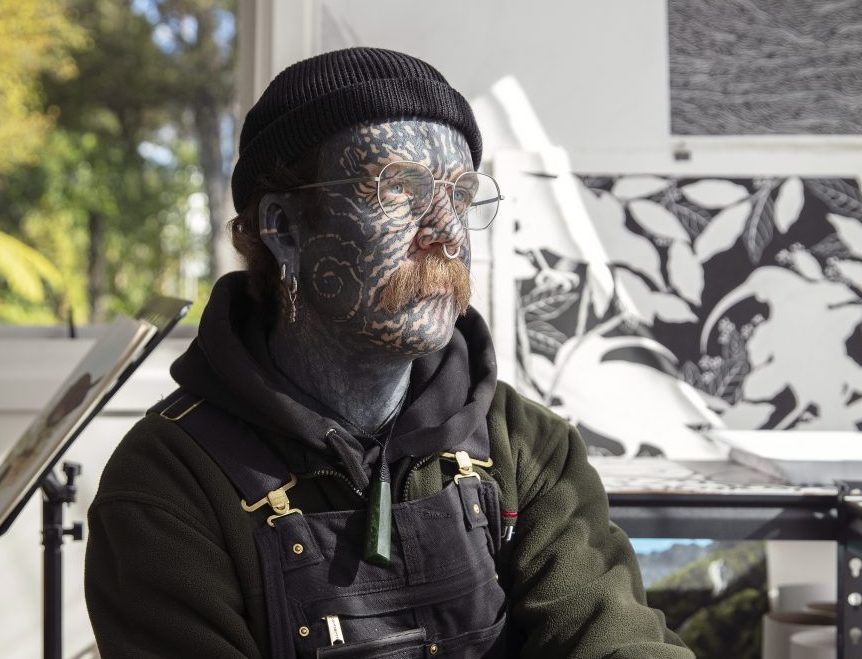
This artist’s canvas is people’s skin
From time to time, Rīhari Warnock looks in the mirror or down at his arm or his leg, and feels like something no longer looks right. So he changes it. Extensive tattoos flow across his body, most of them cover-ups—new work obscuring the old, layer upon layer of ink, applied across years. Almost all of these marks, he’s made with his own hands. “It’s my identity, that’s what I’d call it. I have autonomy over my body and I don’t have to say any more than that. It’s who I am, it’s who I’ve always been.” Keep reading...
|
|
|
| |
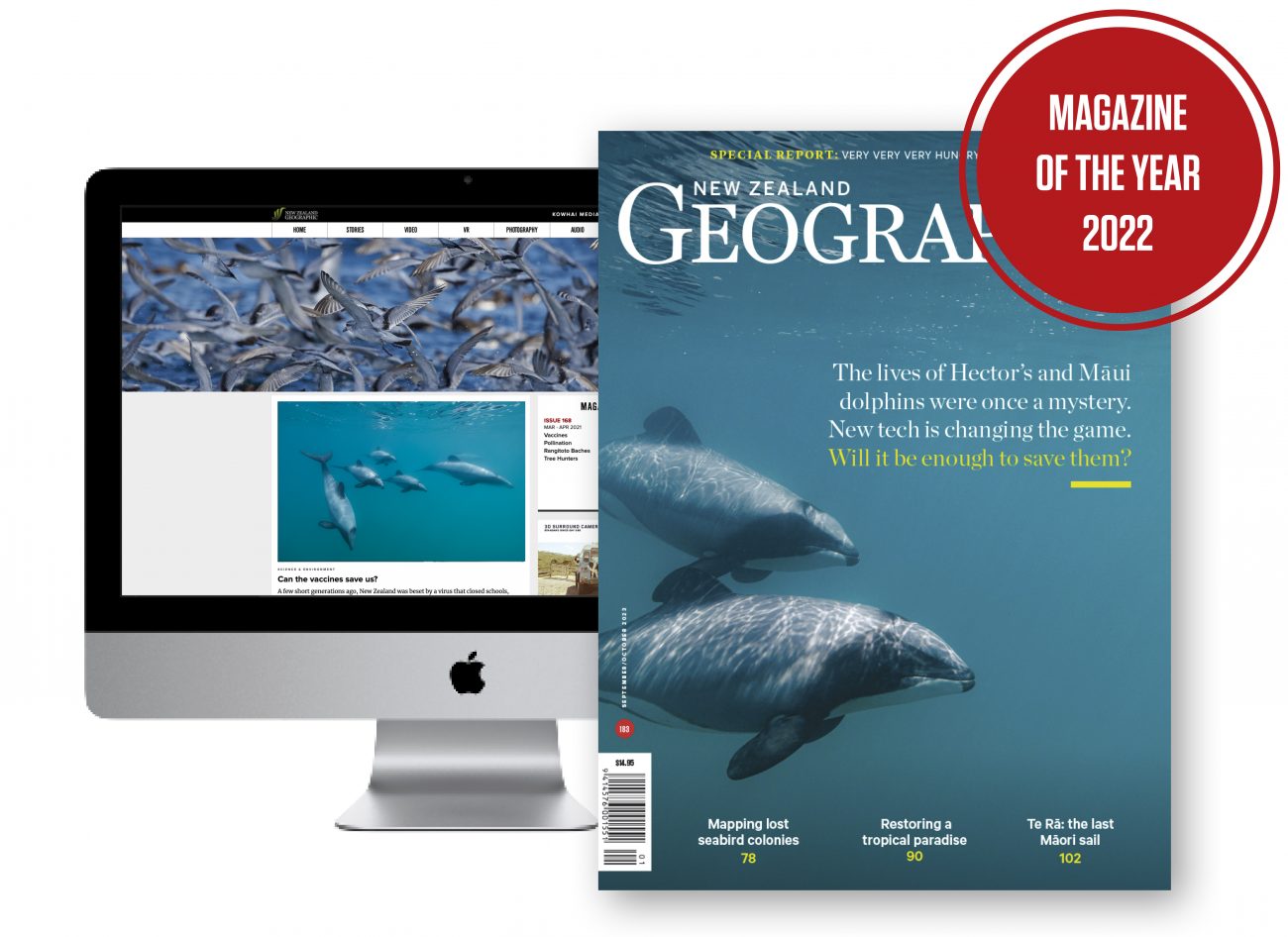
New issue in stores now
Featuring a landmark story on Hector's and Maui dolphins, the seabird colonies that once shrouded our coasts and mountain ranges, a new invasion of armyworms in New Zealand's north and the return of the last Māori sail, Te Rā. Never miss an issue, think about subscribing... it's not as much as you think—$8.50 every two months for digital, $12 for print or $16.50 for both... a gold coin a week. Check out the options.
|
|
|
|
| |
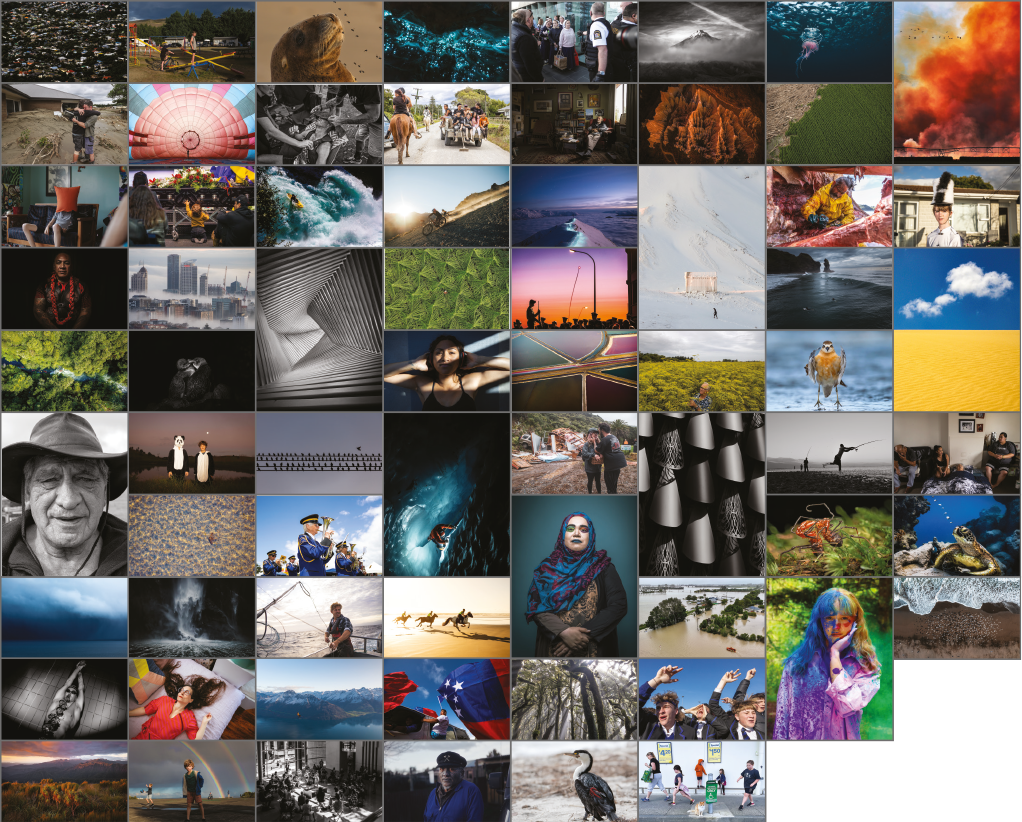
The finalists have landed...
Choose the best images of the year from 68 finalists in the New Zealand Geographic Photographer of the Year awards. Your vote counts towards the Ockham Residential People's Choice award. Click through, peruse the pixels, carefully determine your favourite and make your vote count in the second-most meaningful election of the year. View the finalists >
|
|
|
| |
Where the wild things are
Barely seven per cent of New Zealand is land. The rest of it, the wet bit, covers four million square kilometres. To landlubbers, this space beyond New Zealand’s territorial limit is a featureless swathe of open sea, but to mariners, this is the edge of a vast prairie defined by abyssal plains, oceanic trenches, high submarine ridges and towering sea mounts.
It’s the end of New Zealand as we know it, and the beginning of something else entirely, a liquid world ruled by strange currents and invisible waves. Keep reading...
|
|
|
| |
Fishing for the future
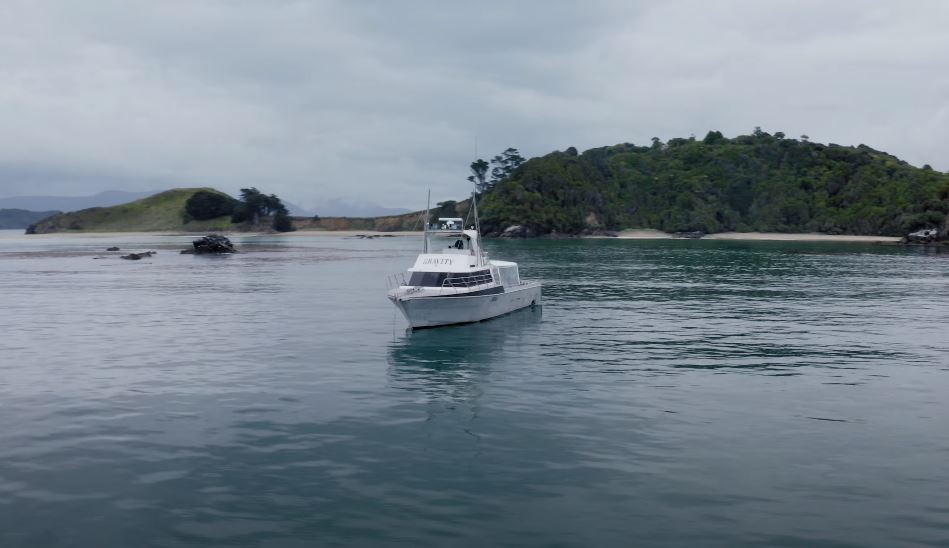
Fishing for the Future shares the story of Gravity Fishing, a sustainable fishing operation run by Nate Smith and Anna Urwin in the waters around Rakiura / Stewart Island. The film highlights a model for small-scale, ethical and sustainable fishing that can provide high-quality kaimoana directly to communities across Aotearoa, while protecting the health of our fisheries. As Nate describes in Happen Films’ 16-minute documentary: "My vision is to give the fish back to the people. When I say people, I mean the five million people that live here in New Zealand. For so long it's been shipped offshore. My intention was to restore regional community access. This is what we once had. There were little fishing ports all over this whole country, and that's been lost over the years because of the way the system’s geared." Watch the film...
|
|
|