|
What will it take to get landowners into native forestry rather than pine?
|
The Weekender |

|
|
|
Free newsletter
|
November 22, 2024
|
|

|
Publisher |
|
Reading through the screeeeeeeds of responses to last week's readers' survey has been illuminating, but most of all, encouraging. I'm not only buoyed by the positive feedback, but also the well constructed criticism. Perhaps I have spent too long moderating the vitriol that gets posted on Facebook comments, but I have been reminded of how valuable caring feedback can be, even when it's pointing out deficiencies or warning of pitfalls further down the road. “There is nothing comparable in the New Zealand publishing landscape. We ‘truthers’ in a post-truth age need you to succeed.” MF This readership is brimming with open-minded Kiwis who relish having their first impressions challenged by new evidence, understanding new perspectives and reflecting on everything we have in common in this curious archipelago. “I enjoy being introduced to new topics, having to think about things differently, and having ideas and long held misconceptions challenged. NZ Geographic has always done this for me.” LD Thank you for caring about the fate and contribution of New Zealand Geographic. Below is a new tranche of stories—a vision of a new future for forestry, some background reading to the tragic shark attack at the Chathams earlier this week, and a recent discovery that kākāpō actually changed colour in order to avoid Haast's eagle! I hope you enjoy these stories as much as we enjoyed preparing them for you. |
|
|
|
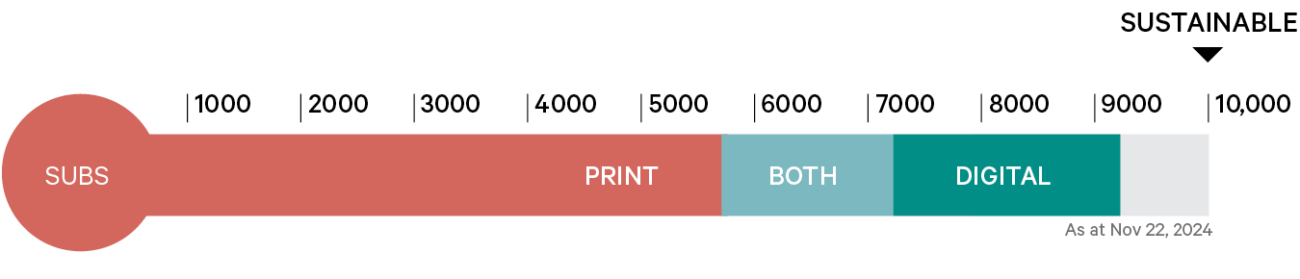
We are closing in on our goal! Just over three weeks ago we had less than 8000 subscriptions, and thanks to the generosity of readers, today we have more than 9200, with 10,000 needed to be sustainable. You can read more about why, here. NZGeo also makes a fantastic Christmas present—it's good value, enjoyed by all the family and arrives six times a year! Check out the options. |
||
|
|
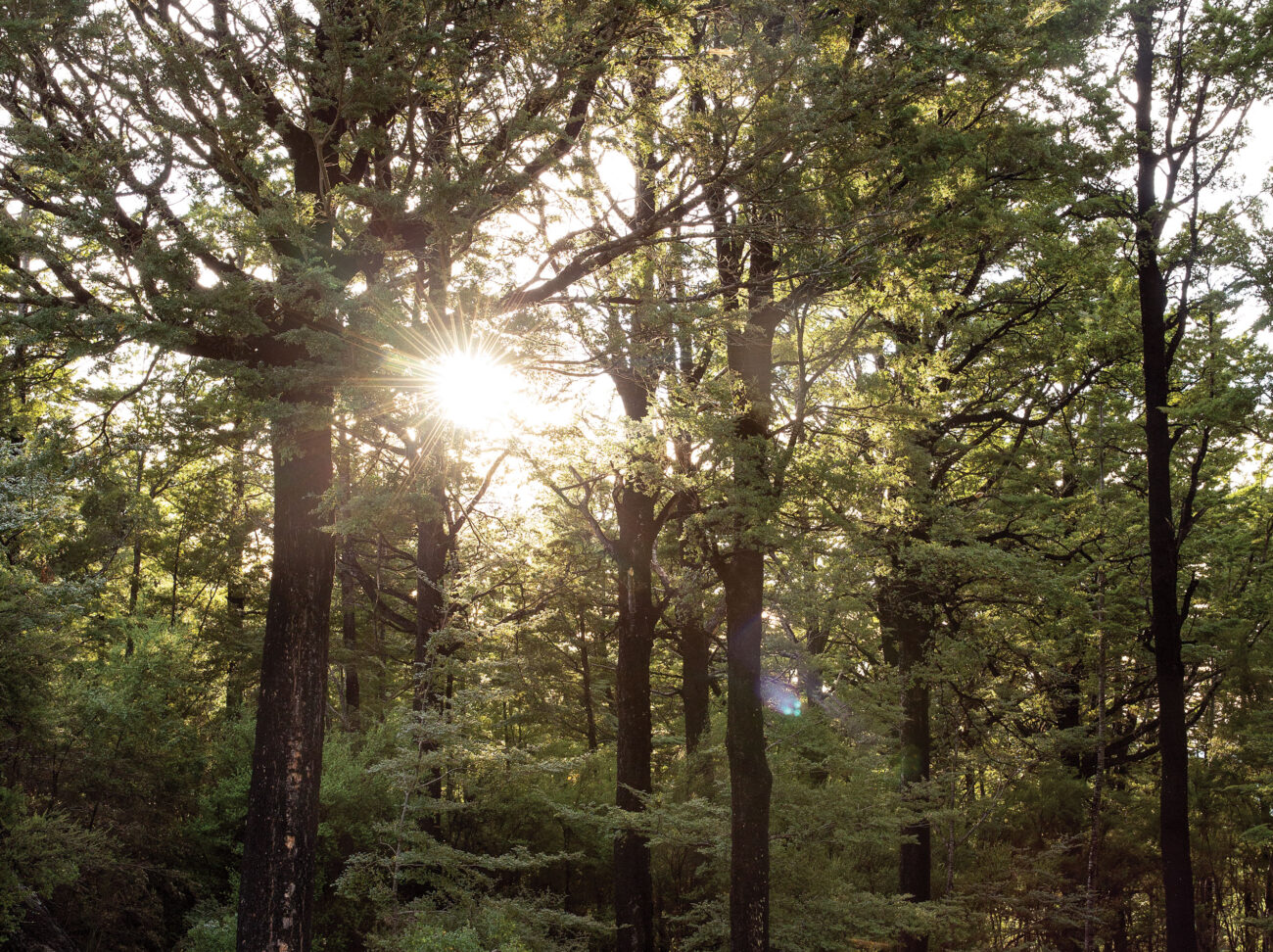
ENVIRONMENT What will it take to get landowners into native forestry rather than pine?Paul Quinlan wakes up at four, vaguely nervous about the day ahead. The tūī are up particularly early, too, as if to herald a significant dawn. As Quinlan drives south from his home in Kaeo, others are hitting the road, too, headed for a patch of regenerating native forest on a farm just out of Kerikeri. There, rooted near a stream at the bottom of a steep gully, stands a mighty dead tōtara. Nobody knows how old it is, except that it wears its “old-man bark”, suggesting centuries. There is something majestic about the tree, Quinlan says. “And a bit sad.” Last night, there was a full moon. In the Māori lunar calendar, today is known as Rākaunui—a good day, decided local hapū Ngāti Rēhia, for the felling of this tree and a younger, living tōtara nearby.A karanga reverberates through the forest. Ngāti Rēhia master carver Renata Tane climbs down to the dead tree’s base to bless the harvest, rhythmically tapping the trunk with an adze while chanting a karakia. Surrounding the old forest giant, young nīkau sway along the damp banks of the stream. Rimu, taraire, kohekohe and gangly kānuka lean into the sun. Tree feller Michael Harrison loops a chain around the tree, tying it to a bulldozer waiting at the edge of the forest. The first chainsaw cut, a V-shaped wedge, determines the direction the tōtara will fall—between neighbouring trees, not on them. The second cut, opposite, stops just short of toppling the giant. Everyone retreats from the site and, with a tug from the bulldozer, the remaining hinge snaps. The tōtara comes down in a thunder of splintering wood. Its crown, white and leafless, shatters on the forest floor. There descends what Quinlan calls “the quiet after the fall”: people watching in silence and awe as the shivering canopy returns to rest. Then the team gets to work, cutting off the broken top so the bulldozer can pull the 12-metre section of straight trunk from the bush, threading it carefully to avoid damaging other trees and saplings. |
MORE STORIES ABOUT THE FORESTRY: |
|

|
|
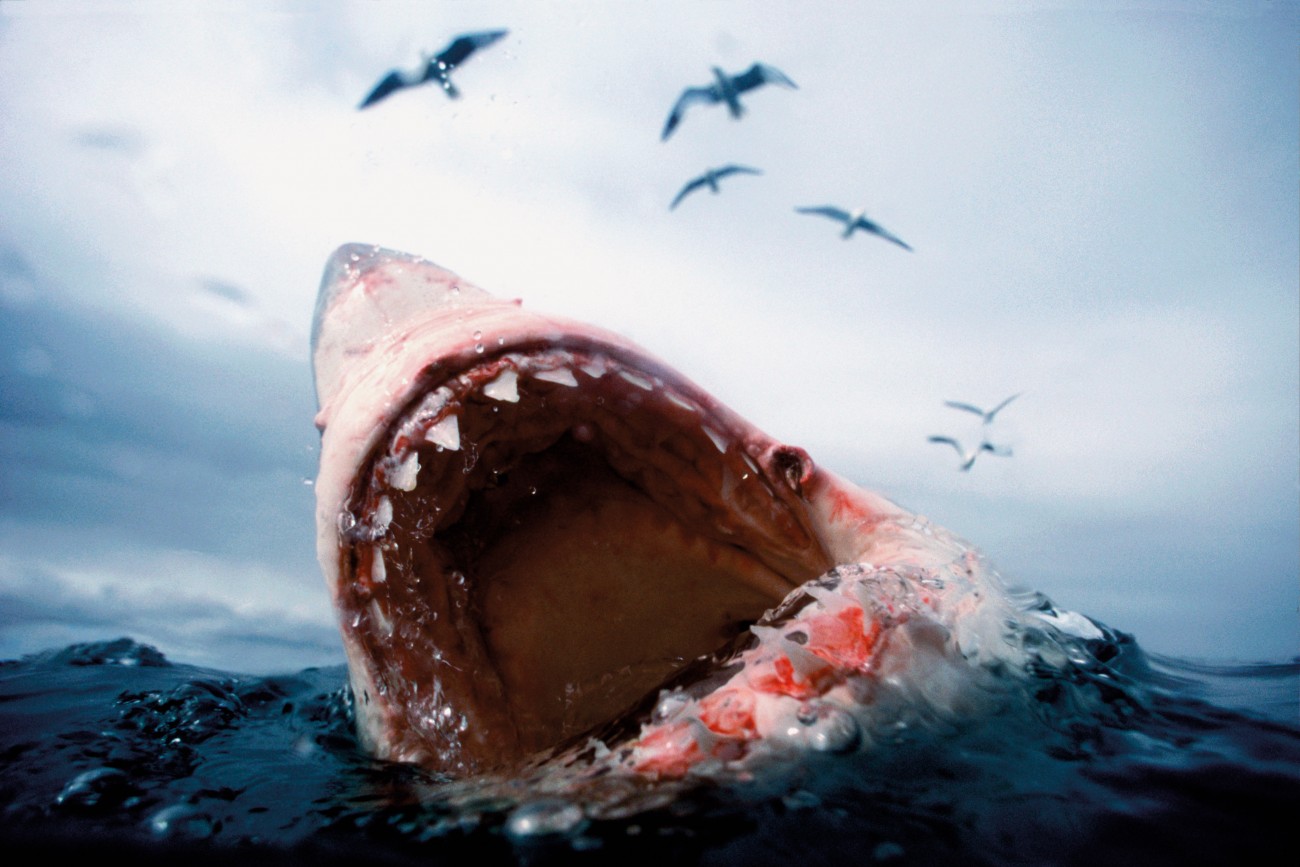
WILDLIFE Tragedy at the ChathamsEarlier this week news arrived of a tragic shark attack on commercial diver Jade Kahukore-Dixon at the Chathams. He was brought to Waitangi Wharf but passed away soon after at the Chatham Island Health Centre. In 2009 I spent a week tagging great white sharks at Rakiura/Stewart Island with scientist Clinton Duffy. They ranged in size, but the largest sharks were nearly the length of the boat, with bodies like the fuselage of plane. Later I visited Mike Fraser, a man who had his arm ripped off by a great white while snorkelling at Campbell Island in the subantarctic. At that time, no one believed sharks could even inhabit the Southern Ocean. He described the event in vivid detail, creating an image that immediately came to mind with this week's news. By Fraser remains philosophical. “I can’t understand why people want to kill apex predators,” he told me. “They’re just doing what they do.” |
|
|
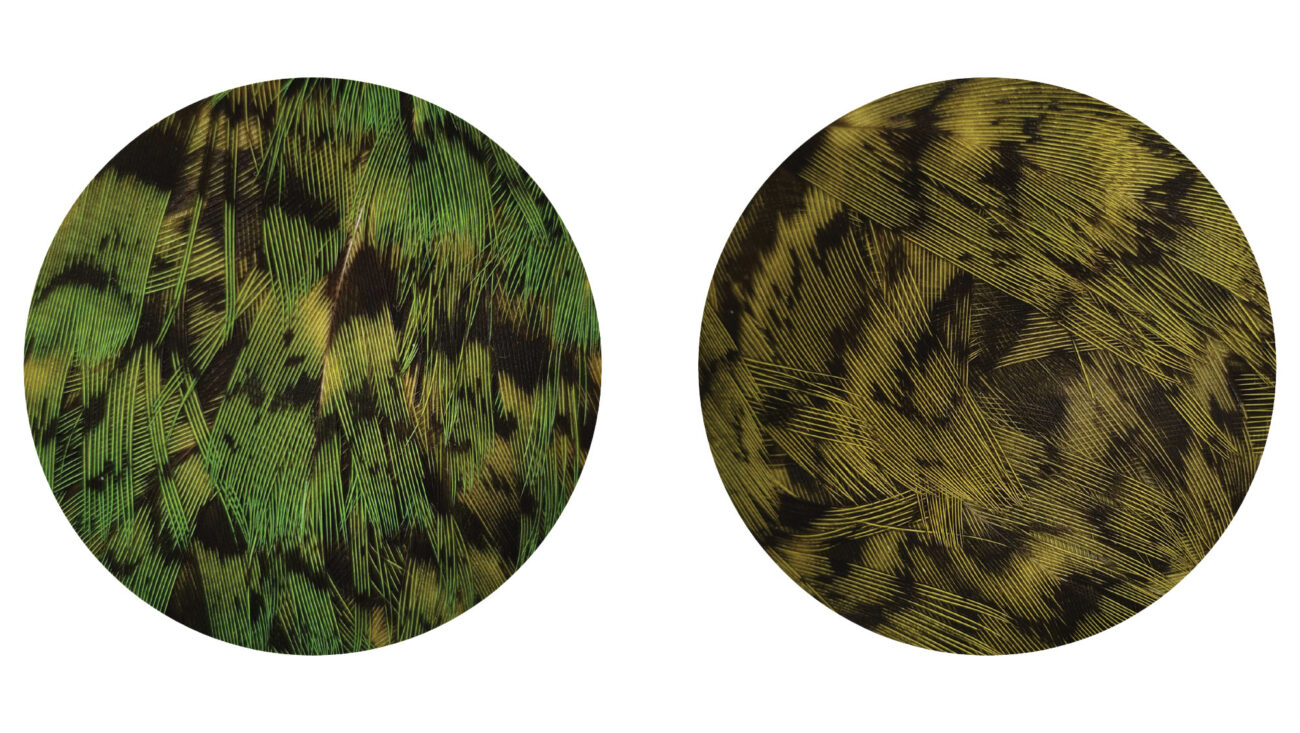
NEWS What to do if hunted by giant eagles? Just change colour.Researchers now think the reason kākāpō come in two hues—green or olive—is that once, they had to dodge flying apex predators such as the Haast’s eagle and kērangi, Eyles’ harrier. Department of Conservation kākāpō specialist Andrew Digby says all kākāpō were once green. But a new study he co-authored shows that about half a million years after giant eagles arrived on the scene, “olive became the new kid on the block”. That novelty kept the olive birds safer. “Birds of prey hunt by sight,” he says. “If you’re used to seeing green, you might not recognise olive as food.” |
|

|
|
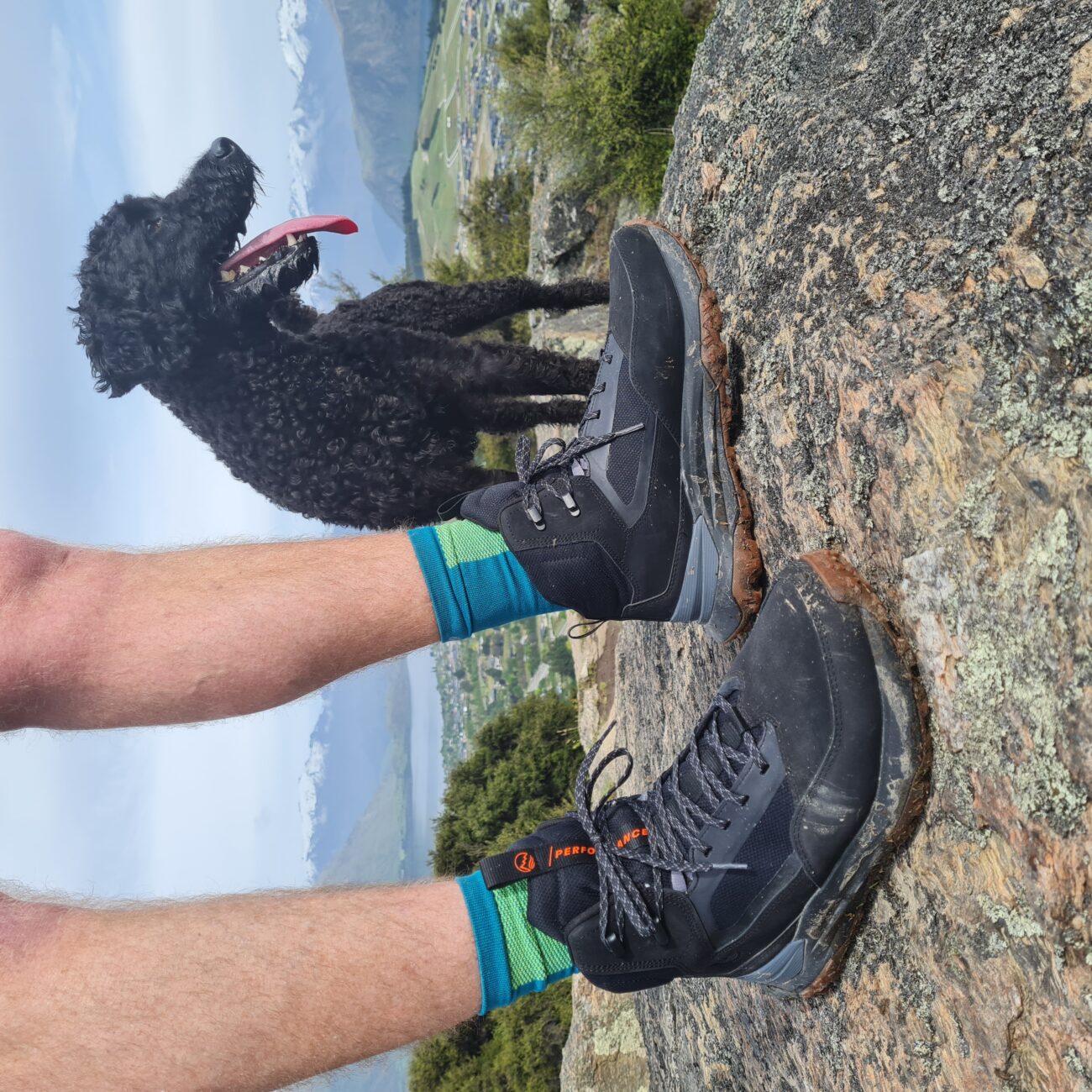
PARTNER CONTENT Walking in WānakaPretty much every morning and evening, I put the earbuds in, queue up a few podcasts and head off for a walk with our democratically named dog Pepperoni Gustav von Doggington. 'Exercise by default' is one of the many joys of dog ownership and my trusty trail shoes have clocked up plenty of kilometres around the streets, trails and hills of Wānaka. But all that trekking was taking its toll. The foam at the back was starting to fall off and things were getting a bit slippy on the pine needles of Sticky Forest, the wet grass of the reserve and the gravel of Mount Iron. Fortunately, Timberland had decided to advertise its new Motion Access range in the last issue of New Zealand Geographic and offered a pair to try out. A box arrived on the doorstep a few days later. “Rugged,” it said on the packaging. “Combines comfort and performance,” it said. It featured a “TIMBERCUSH comfort system” and “TimberGrip technology for traction” and promised to be “responsive to every active movement”. It was quite a billing for the sceptical sportsman to swallow. |