|
One big story for your weekend.
|
The Weekender |

|
|
|
Special edition
|
FEBRUARY 2, 2024
|
|
 |
Senior editor, digital |
|
Call me naïve, but I thought storms worked like this: widespread devastation, then widespread clean-up, funded by government or insurance—those institutions we pay in case of natural disasters. This isn’t what happened with Cyclone Gabrielle. The devastation was immense. The clean-up was practically non-existent when it came to people’s homes. Until a bunch of volunteers turned up, organised themselves into crews, and started tackling ruined houses. The volunteers came from all around the country. They knew something about being left out or dismissed. They didn’t always see eye-to-eye with the people they were helping, but that hasn’t stopped them. A year later, they’re still going. Sometimes this country feels as though it has been irreversibly divided, and those of us on one side of the fissure can’t hear anything the people on the other side are shouting. In this story, the fissure closes, a little. I wish the same thing for all of us this Waitangi Day. |
|
|

|
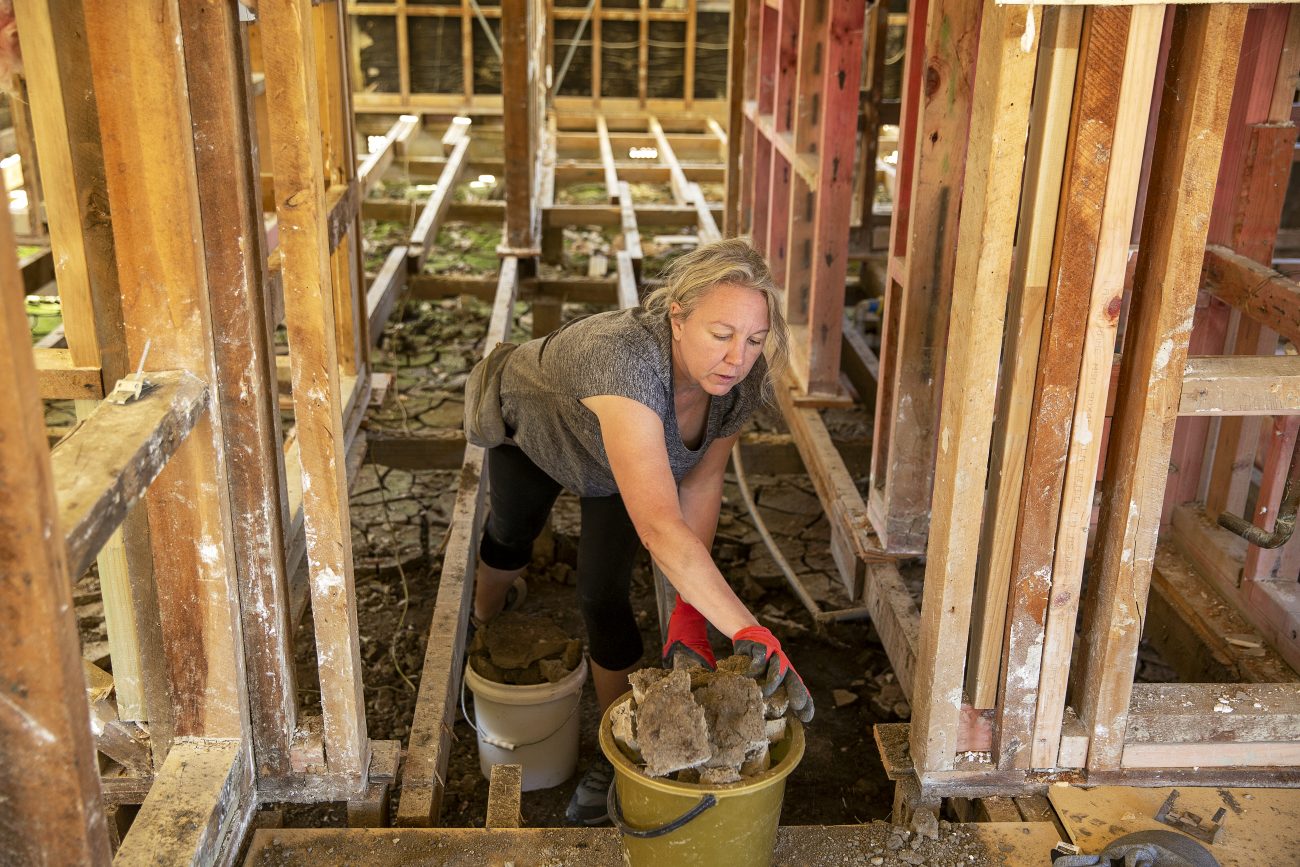
SPECIAL REPORT Cyclone Gabrielle destroyed people’s lives. Volunteers are picking up the pieces.When the water came, just after 9am on February 14, 2023, John and Linda Hogan were standing on the deck of their house in Pakowhai, near Hastings. They looked to their right and saw a previously non-existent river roaring through the truffle trees. Straight ahead, a wall of brown water was surging at them across the paddock. John, 69, ran to alert their son, who lived in the larger family home at the front of the property with his wife and their two small boys, aged five and three. Meanwhile, Linda, who needs a cane to walk, grabbed the passports, her meds and her smokes. By the time John returned to get her, the water was up to their knees. The whole family sheltered briefly at the neighbours’ place, but the water kept on rising. So they set out in two vehicles for a cottage on higher ground at the end of the road. To get there, they had to drive through a big dip in the shingle driveway that had filled up like a bathtub. The car carrying Linda, her son, her daughter-in-law and the kids made it through okay, Linda doing her best to convince the boys they were on a great adventure. But John’s ute stalled deep in the dip. The water was halfway up his window, and his door wouldn’t open, and Linda was sure she’d lost him. Then John, by now numb, turned the key one more time and somehow the ute started; he put it in first gear and gunned it out of there. The family waited in the cottage with some neighbours, watching dead sheep and machinery drift by, until they were choppered to safety around 7pm. The living room was piled high with apples, onions and pumpkins. Four bookcases of Linda’s beloved novels were destroyed, and fridges and freezers had floated away—but in the corner of the garage, they found the ashes of John’s brother-in-law intact in their boxes with his gold watch still sitting on top. And everywhere they looked, there was silt—clotted and slick, the colour of liquid shit. It suctioned their gumboots off as they walked; when they tried to pull furniture from the mire, the silt sucked it back again. John and Linda couldn’t stand to be there—especially not in the family home where they’d hosted 31 big, boisterous Christmases and farewelled dead loved ones in the front room. They’d lost nearly everything they owned. Linda’s 42 rose bushes—old, fragrant, irreplaceable varieties—had been obliterated. The birds, once riotous in the fruit trees, had vanished; instead, for months, John and Linda heard the floodwaters roaring in their heads. John tried to make a start on cleaning up but, though he’d always been a hard worker, a hands-on guy who’d run his own businesses, he just couldn’t focus. Linda, who suffers from a degenerating spine and diabetes, got septicaemia from the floodwater and nearly died. “We were both not far from going over the brink,” Linda says. Then, one day, a group of people in work gear walked down what was left of their driveway. “Can we help you?” asked one, a woman with dark hair cut short on the sides and wavy on top. Without waiting for an answer, she enveloped John in a hug. He was a little taken aback. “But I really needed that hug,” he says, “and she knew that.” |
|
|
IN THE FIELD How we reported this storyThree days after Cyclone Gabrielle, journalist and editor Rachel Morris (pictured above) flew to Hawke’s Bay to check on family—she’d grown up in Hastings. While there, she signed up to help pack food for communities that had been cut off by the floods, and saw a remarkable volunteer effort spring to life. In November, struck by the fact that the volunteers were still going, she started reporting this story for New Zealand Geographic. She asked to dig in with one of the clean-up crews who were still shovelling masses of silt out of houses by hand. Soon, Raglan-based photographer Lottie Hedley joined them, too. Rachel and Lottie found that many cyclone survivors felt abandoned by authorities and ignored by media. Even in Hawke’s Bay, there were plenty of locals who had no idea of the devastation that remained, the trauma that people had experienced on the day of the flood, and the number of people who were living in sheds, caravans or hotel rooms, unable to return home. Over the course of four months, Rachel and Lottie spent several stints in Hawke’s Bay working with the silt crew and spending time with cyclone survivors. In the end, they interviewed or photographed dozens of people. Not all of them appear in the story, but their insights and observations were essential to it. |
|
We intend to bring you more deeply researched longform journalism online at nzgeo.com. It’s funded by subscriptions. If you’re a subscriber, thank-you. If you’re not, please enjoy the story, and consider supporting more of this kind of work—it costs less than a dollar a week. |
|