|
If it’s a dog-eat-dog world, why are so many animals nice to each other—and us?
|
The Weekender |

|
|
|
Free newsletter
|
FEBRUARY 7, 2025
|
|

|
Publisher |
|
Our “Just So” columns are pitched as accessible, humorous reading in each issue—written and illustrated as a sort of antidote to news that can often create anxiety. That doesn't mean the themes are frivolous, however. Kate Evan's latest column, below, considers kindness; how it might be an advantage for groups, and also how remarkably often it has been seen between species. British evolutionary theorist William Donald Hamilton showed that the cost-benefit equation that governs whether we do something to benefit another individual is a function of how closely we're related. But there are factors that operate at larger scales too. Humans are also capable of understanding shared fate—the awareness that planetary scale problems will eventually affect everyone. We also have cultural mechanisms, social norms, moral teachings, group sanctions and policies that guide our collective behaviour. These contribute to the idea of inclusive fitness—that we are stronger when acting together. Evolutionary theory suggests that leaning on our inclusive fitness could save the world. Seeking to divide or exclude ultimately costs all of us. |
|
|
|
|
Thanks to NZGeo's committed readers we now have more than 10,000 subscribers, enough to power our journalism through this difficult period. If you'd like to support our work with a subscription—either print or digital or both— please check out the options.The more subscribers we have, the more great work we can produce. |
||
|
|
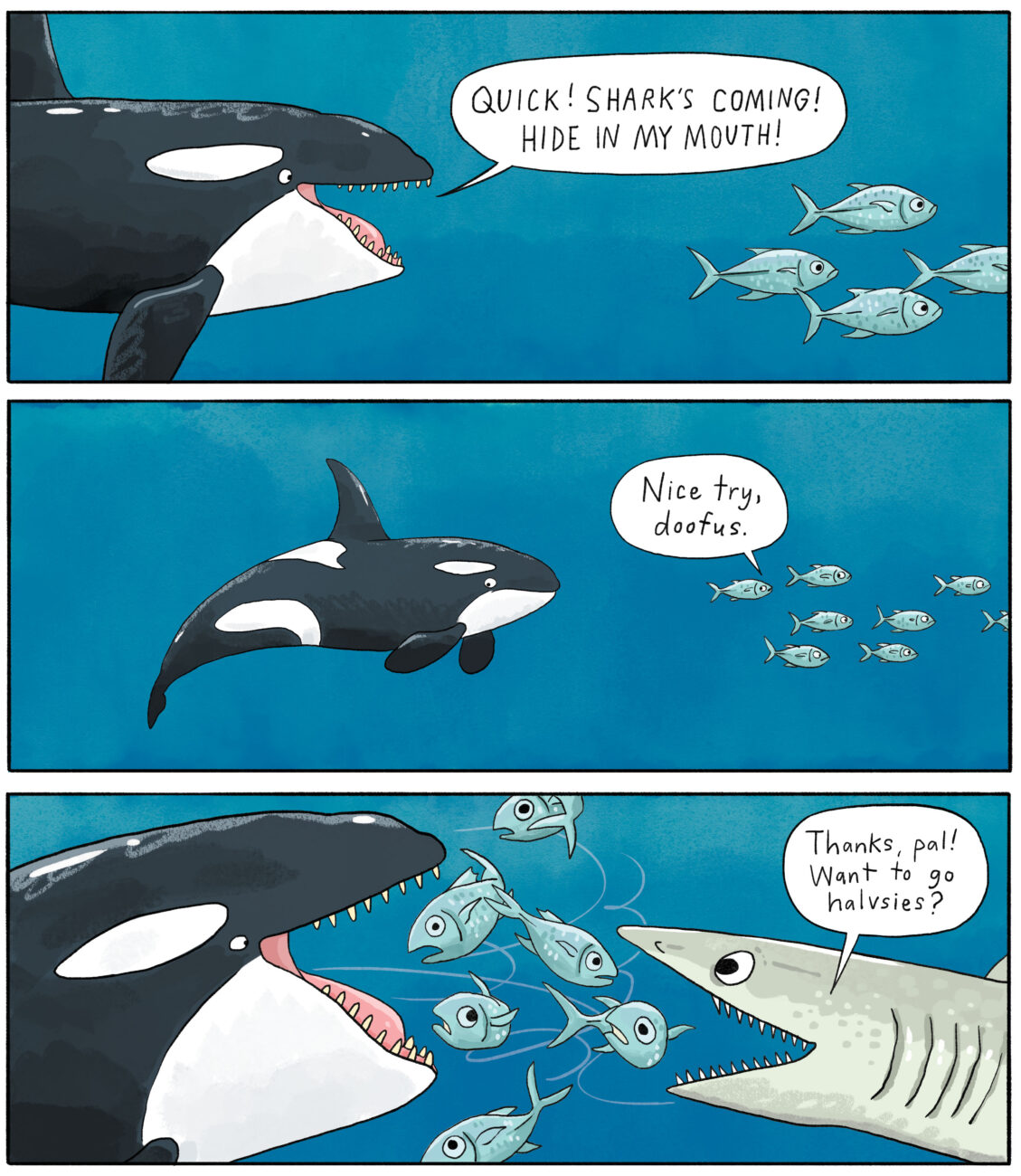
JUST SO If it’s a dog-eat-dog world, why are so many animals nice to each other—and us?In the animal world, there’s a lot of what looks like kindness. Northern hemisphere songbirds share information about where to find food with birds who are much worse at scouting than they are. (In these bird social networks, tits are usually a “leader” species, locating and broadcasting new food sources, while nuthatches are usually a “follower” species, turning up just to eat.) Australian magpies help each other to remove scientific trackers, as though the whole group is protesting surveillance. In the Red Sea, groupers and giant moray eels work together to hunt. To kick things off, groupers stop by a moray eel lair and wiggle their heads right in the moray’s face; the two swim off together. Only one of them will end up with a full belly—both swallow their prey whole, no divvying it up first—but they trust the partnership will even out in the long run. Since the time of Charles Darwin, evolutionary biologists have been trying to figure out why some animals are altruistic—why they might sacrifice or disadvantage themselves to benefit others. According to evolution, being nice just doesn’t make sense. For starters, helping another animal usually comes with risk. A meerkat that spots a jackal and pops up to sound the alarm for her whole community draws the predator’s attention. Takahē that devote themselves to raising other takahē’s chicks postpone starting a family. So, if nice animals are more likely to get killed putting themselves in danger, or to miss out on finding a mate, wouldn’t that eventually wipe out the genes for kindness? |
MORE STORIES FROM JUST SO: |
|
|
|
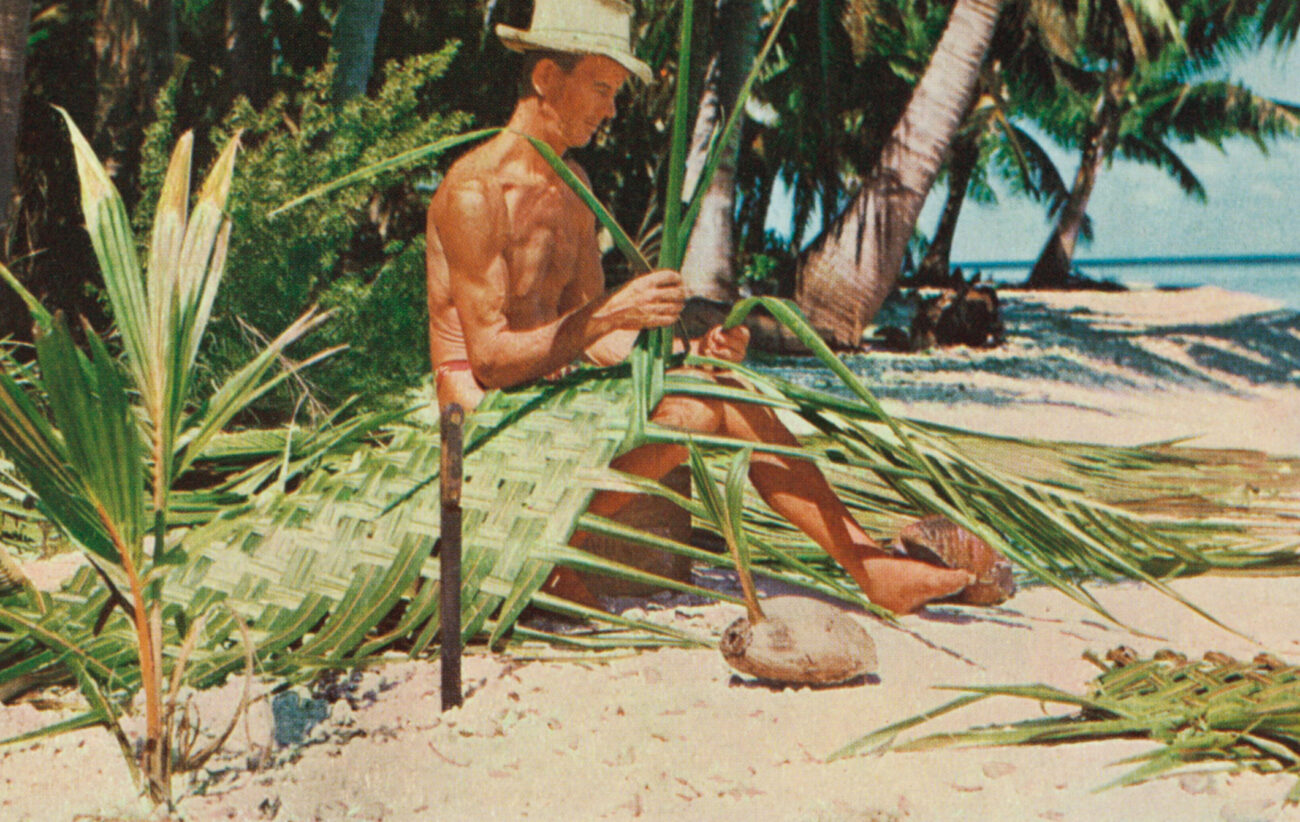
NEW BOOK Six years alone on a desert islandTom Neill is dropped off on Suwarrow, an uninhabited atoll some 900 kilometres north-northwest of Rarotonga, on October 7, 1952. As soon as he is alone, he takes off his shorts. He only puts them on again when a boat stops by. And it’s a long time between boats. Neale was born in Wellington and grew up in Greymouth and Timaru, joined the Royal New Zealand Navy, and fell hard for the South Pacific. He would spend the rest of his life there, picking up work in Rarotonga and Tahiti, but it was Suwarrow that held his heart, from the time he picked up Robert Dean Frisbie’s account of the place, The Island of Desire. |
|
|
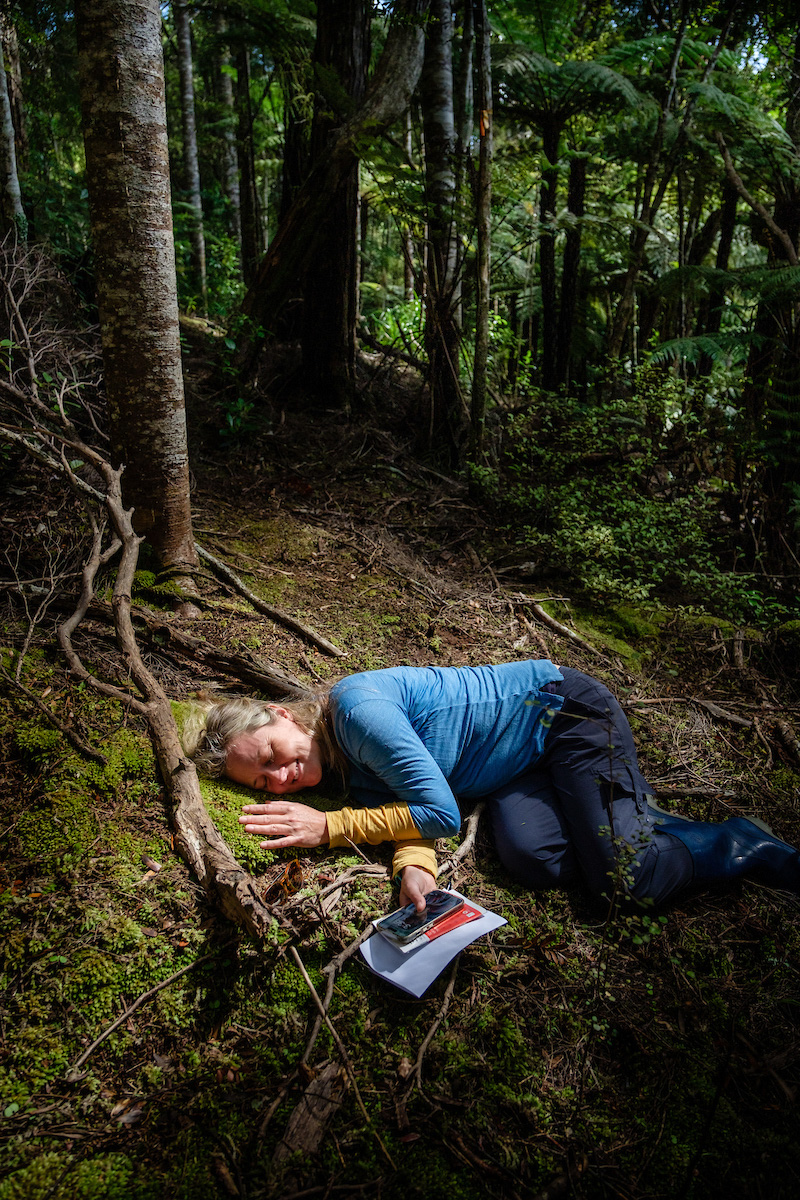
COMING UP Kate Evans is absolutely flat out... on a new story about tree fernsIt surprised us to discover that every second tree in the New Zealand bush is a tree fern. But that's not the half of it. Using magnetic resonance imaging (MRI) usually reserved for brain scans, scientists are beginning to deconstruct the radical inner workings of ponga and other native ferns. Look out for the feature in the next issue of NZGeo which comes out March 3rd. |
|