|
| |
The other Esk Valley flood
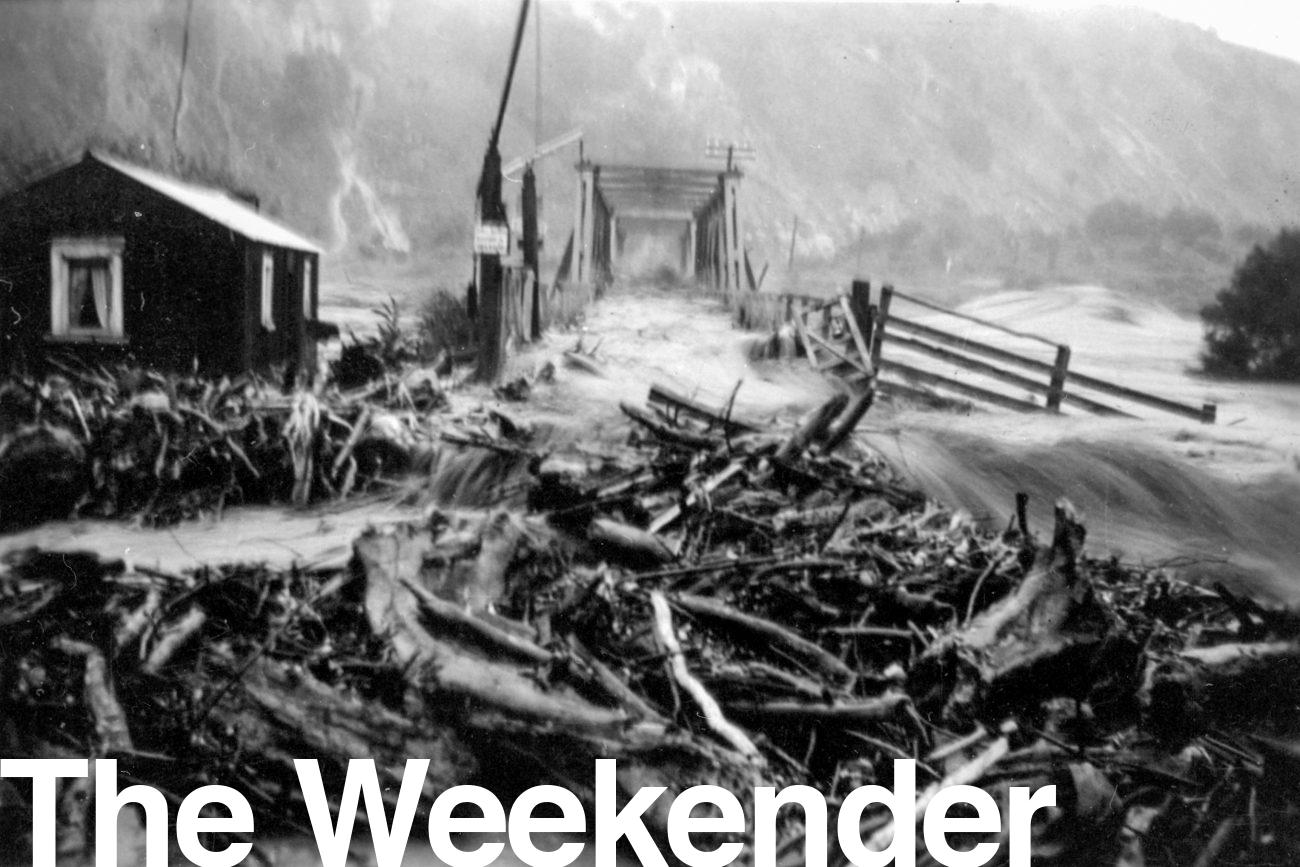
Disconcerting, how quickly we forget the past—even the most traumatic parts of it. This week, a 2016 weather column by longtime severe weather forecaster Erick Brenstrum has been doing the rounds: published in Issue 142 under the headline ‘Inundated’, it’s a reminder that the Esk Valley, among other parts of Hawke’s Bay, has been devastated by flooding before. That's come as a surprise to many of us, including readers from the region. (For more of our weather coverage, including Brenstrum's columns, click here.) The Esk Valley flood of April 1938, Brenstrum writes, lasted three days, bringing up to a metre of rain to an area of Hawke’s Bay about 16 kilometres wide and 60 kilometres long from Kotemaori to the watershed of the Tutaekuri River. Parts of Napier, Clive and Hastings were flooded a metre deep and the level of Lake Tutira, north of Napier, rose by three metres after more than 300 millimetres of rain in 14 hours. Worst hit was the Esk Valley, where the river rose 10 metres in one stretch. Fifty-four bridges were washed away or severely damaged across the district, stranding many people. Slips were widespread. One farmhouse, well above the Esk River, was partially destroyed by one and the occupants forced to flee through the rain to the woolshed. Minutes later, a larger slip crushed the rest of the house and buried the remains under 15 metres of debris. Keep reading…
|
|
|
| |
New issue out Monday
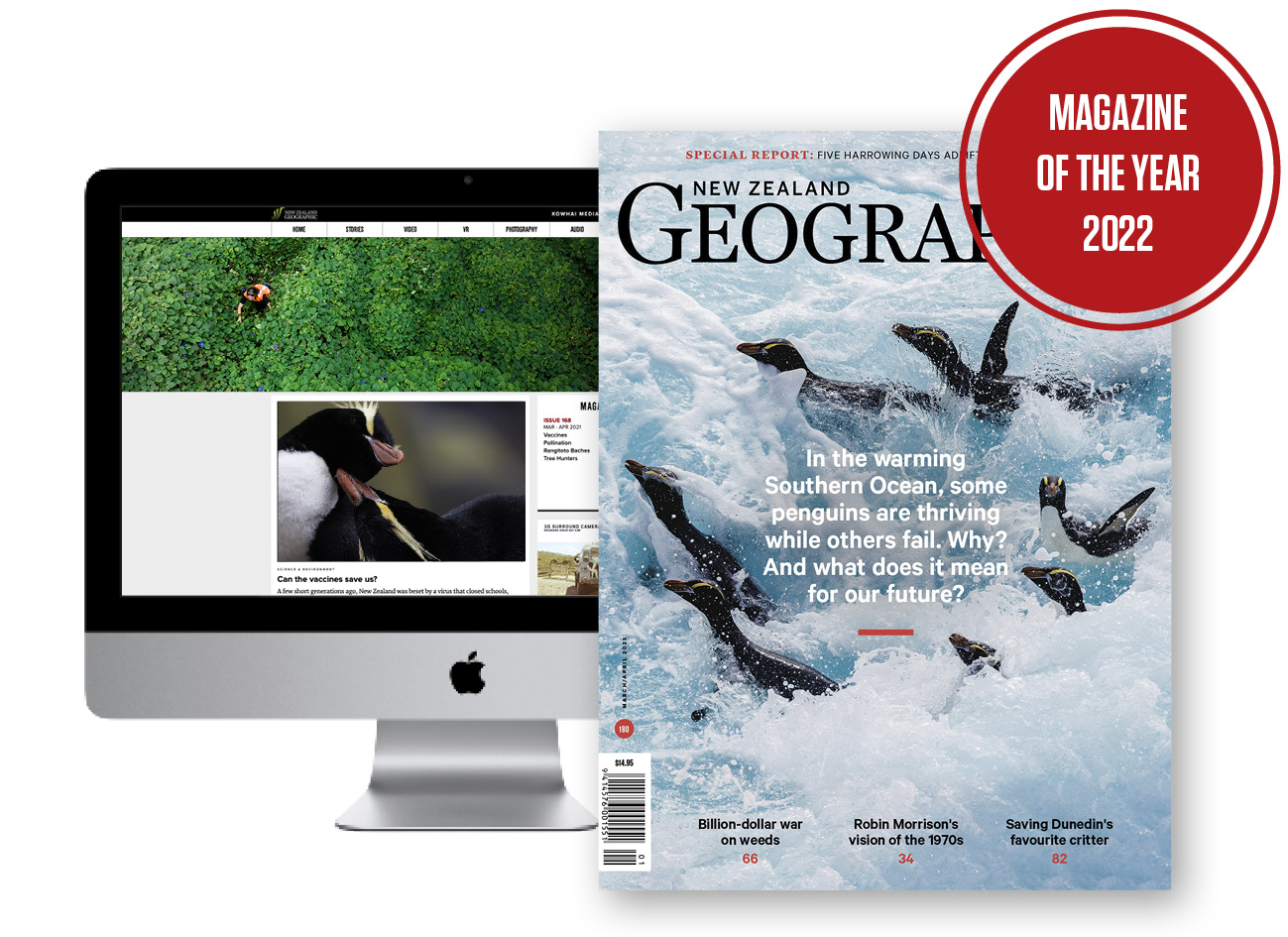
A fantastic new issue is out Monday, featuring a raft of compelling stories, including the mystery of why one penguin colony in the Southern Ocean is thriving while another fails, what to do about the jungle of invasive pest plants, the fight to save Dunedin's favourite critter, and a rollocking story of survival, adrift on ice floes in Antarctica... all packed into a single issue. Get your copy at supermarkets or bookshops, or subscribe to ensure you never miss an issue. It's not as much as you think—$8.50 every two months for digital, $12 for print or $16.50 for both... a gold coin a week. Check out the options.
|
|
|
|
| |
Releasing the taniwha
After four frustrating years on hold, Te Matatini —the “Olympics of kapa haka”, as Charlotte Muru-Lanning puts it in her Spinoff primer—is back and tearing up Tāmaki Makaurau. The competition is held at Eden Park and finishes tomorrow with performances by nine finalists. They’ll be announced later today. In Issue 173, in an excerpt from her beauty of a book NUKU, Qiane Matata-Sipu profiled top kapa haka performer Kurahapainga Te Ua (called Kura). “At primary school, Pounamu Performing Arts used to tour all the schools and do kapa haka brackets, and I knew I was related to them. They were like my superheroes, and all I wanted to do was be a kapa haka performer. “I used to turn red all the time if someone spoke to me. I was just so terribly, traumatically shy. Even though inside of me I wanted to be a performer, I didn’t know how to bridge the gap and open myself. I didn’t know how to release the taniwha that was sitting on me saying, ‘No, no, no, no, no, no, no, no, you’re gonna look stupid’.” Keep reading…
|
|
|
| |
A new (AI) broom
By 2033, experts reckon, artificial intelligence could be picking up 39 per cent of domestic chores. As the BBC explained: Researchers from the UK and Japan asked 65 artificial intelligence (AI) experts to predict the amount of automation in common household tasks in 10 years. Experts predicted grocery shopping was likely to see the most automation, while caring for the young or old was the least likely to be impacted by AI.
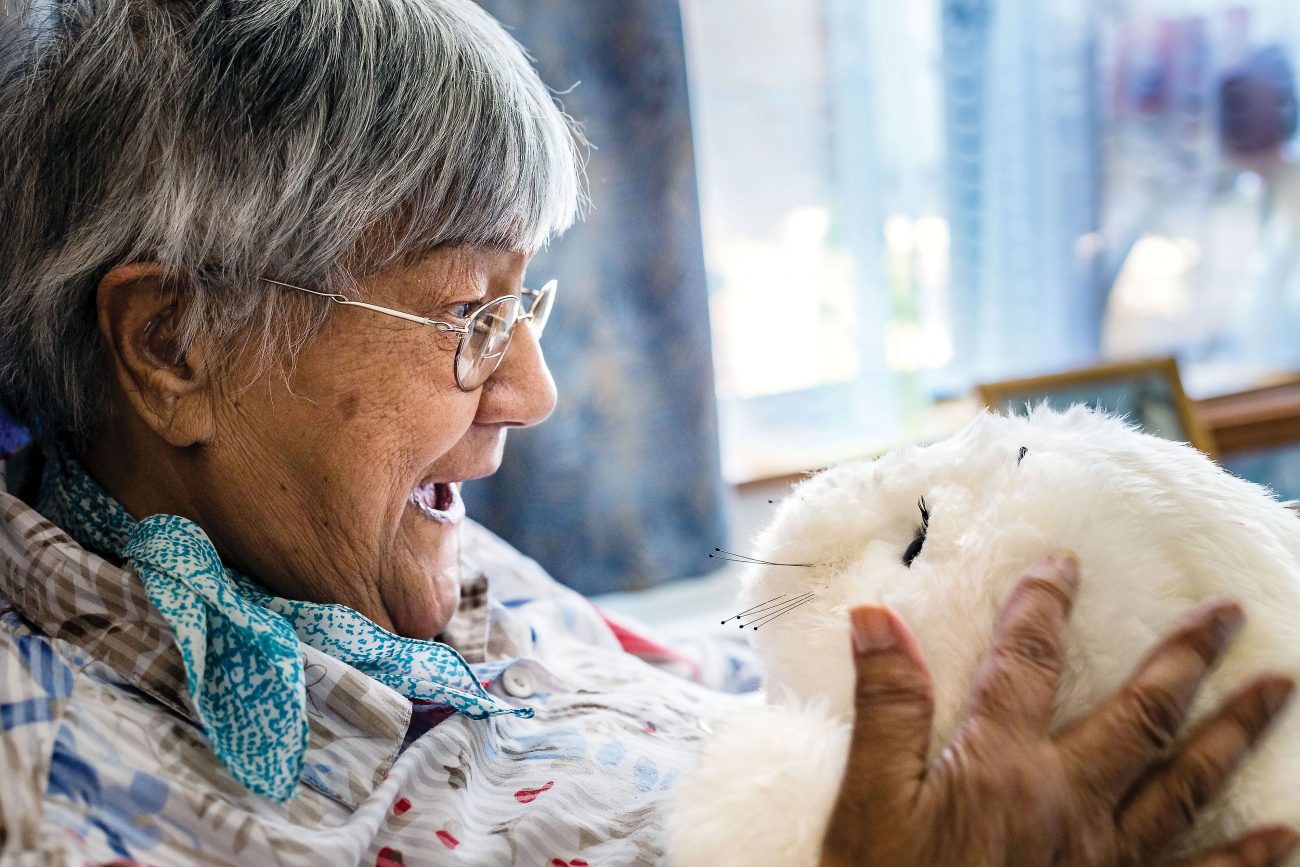
But there are already robots in Aotearoa rest homes. In 2018, for Issue 149, Naomi Arnold and Adrian Malloch met some of them—and the people they're helping. Like Lillian Nelson, then 84 and living at Selwyn Village in Auckland. “I do feel lonely, so I generally come in my room and I sing my songs. I put the telly on and sing the music that comes over.” When it’s her turn to have Paro, a fluffy robotic Canadian harp seal with large, fathomless eyes, she’ll sing a song to him. Deceptively complex and comfortingly heavy, Paro recognises words, and adapts his behaviour to everyone who holds him. People aren’t meant to kiss the seals, but the fur on his head is nevertheless streaked pink from someone else’s lipstick. “He gives you hope,” Neilson says. “You’re just sort of sitting here on your own, falling asleep, but if you have something like this you’re inclined to talk, and he’ll give you an answer.” Keep reading...
|
|
 |
|